
Collaborative Drone Networks Unlock Food Deliveries for Independent Restaurants
The key to unlocking drone-borne food deliveries is breaking out of single-brand silos and sharing drone delivery infrastructure, making it accessible to any and all businesses throughout a region.
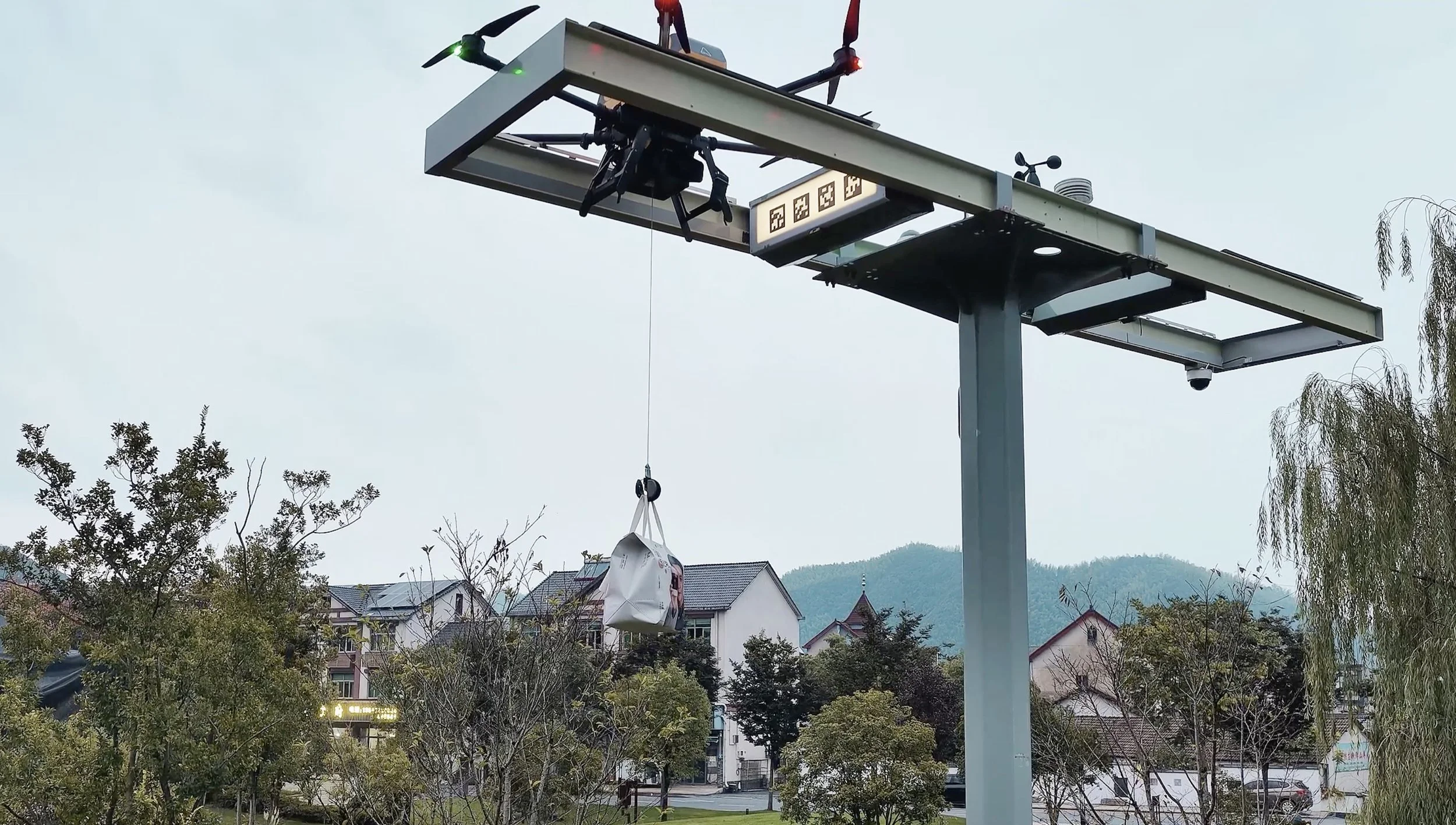
Since the advent of commercial drone delivery, last-mile food deliveries have been on the minds of the consumer market. Some notable large national restaurant brands have launched their own food delivery trials, but the innovative delivery paradigm and its unique benefits for restaurant operators have largely been viewed as out of reach for the local independent restaurateurs. That belief is now a gross miscalculation with our shareable A2Z AirDocks, which make the drone delivery financially viable for local restaurants willing to work with other local partners to get their food delivery operations off the ground.
More Than Marketing – Benefits of Drone Delivery for Restaurants
For restaurants, both large national chains and independent local restaurants, delivering food orders from the air can be a powerful visibility tool for the restaurant brand. Flying a burrito to a customer’s front door can certainly splash a restaurant brand onto the trending tabs of social media platforms. It’s part of the reason the corporate leaders at Chipotle launched drone delivery trials in the Dallas-Fort Worth area.
Beyond the marketing splash, drone-borne food deliveries are faster and more environmentally friendly than rushing deliveries across town in a ground vehicle. Flying high above traffic lights, construction, or rush hour traffic takes street congestion out of the delivery equation. Replacing traditional combustion vehicles with battery-powered delivery drones can also significantly reduce carbon emissions. While faster and more eco-conscious deliveries are another good marketing tool, for drone delivery to make financial sense, they also need to directly impact a restaurant's bottom line.

Home delivery has long been an important revenue-driver for restaurants. Yet, in recent years, many have moved beyond employing their own delivery drivers and vehicle fleets. Instead, restaurant operators have widely embraced third-party delivery apps, but these services present their own significant cost-benefit balance for restaurateurs.
Anyone who has ordered food for delivery on such a platform knows how the convenience can exponentially elevate the price of a single order, and a generous tip is a necessity if you want the order collected at all. For restaurateurs, the fees demanded by such third-party delivery platforms take sizable bites out of their profitability.
These third-party platforms also tend to leave customers with a less-than-optimal delivery experience that is entirely outside the control of restaurant staff. According to research conducted by PMQ Pizza Magazine in early 2026, customer satisfaction with third-party platforms was 10% lower than with first-party deliveries. Third-party transactions were also overall slower, taking 28% longer to complete. And, customer satisfaction ratings on the temperature of the food when it arrived was 14% lower on third-party apps.
Essentially, both restaurant operators and their customers would prefer a better alternative to these ground-based third-party delivery apps. Drone delivery checks off many of these pain points for business owners and their clientele. Faster delivery times mean warmer food temps, and eliminating a human delivery driver means customers can stop worrying about what’s happening to their food in transit…and, of course, delivery drones never accept tips, let alone require them in advance.
Breaking Down the Silo – Shared Drone Infrastructure Enables Regional Food Delivery
The restaurant food delivery trials that have taken off thus far have mostly been confined to a single large brand launching its own stand-alone drone delivery service. Chipotle, mentioned earlier, has been one of the most visible trials, but other restaurants have also begun to explore the benefits of last-mile food deliveries. In Los Angeles, Dave’s Hot Chicken has sent its regionally-loved crispy bites aloft. In Europe, Just Eat Takeaway is offering drone delivery around the Dublin area with plans to expand beyond, and Reykjavik, Iceland residents are seeing orders arrive via AHA, the country’s largest online marketplace.
This siloed approach to standing up a drone delivery service, though, is one of the biggest impediments to drone delivery operating at scale. For a drone delivery operation to be truly profitable, it needs to be able to serve more than just the customers of a single restaurant, or even all locations of a regional chain. The key to surpassing these limitations is to break out of the single-brand silo, and make a drone delivery operation accessible to any and all businesses in a region.
Yes, there are financial, regulatory and operational challenges associated with such a shared service operation, but our team has unlocked this shared delivery paradigm with a regionwide drone dock network that enables any independent restaurant to take advantage of the service.
Most importantly, with some skillful planning, the same regional drone infrastructure can be readily accessible to you.
Not Just Food – A Shared Drone Infrastructure for Multi-Mission Operations
As a Torrance, C.A., based developer and manufacturer of commercial drone solutions, we here at A2Z Drone Delivery, developed a new style of drone dock called we’ve dubbed the A2Z AirDocks, which has become the key to opening large-scale regions to multiple parallel drone services simultaneously.
Our AirDock system automates the charging of our Longtail aircraft without the need for human interaction, so multiple fleets can be layered onto a network of AirDocks to conduct just about any drone service mission autonomously and simultaneously. With payload management tools built into our aircraft, even untrained restaurant workers can load food orders themselves, eliminating the need for hub operators and making restaurant drone deliveries more affordable.
Like many commercial drone developers, we maintain a testing facility outside the US where local drone regulations allow us to fly our test drones beyond-visual-line-of-sight (BVLOS) on a daily basis, a difficult task in the US and especially in the urban neighborhoods around our Torrance headquarters. Our rural outpost outside Shanghai is nestled in a region that is popular with ecotourists and is dotted with restaurants eager to sell to the many visitors of the local resorts, hikers on the area's many trails, and campers staying in the region's campgrounds. The shared AirDock network we’ve built there now stretches to almost 1,000 square miles, and supports a diverse array of drone services in the region from water resource surveys, to search and rescue support, to roadway inspection…and…last-mile food deliveries for any of the region’s independent restaurants.
The region-wide project began when the local municipal water department began seeing our daily test flights overhead and asked us to build a solution to remotely monitor its reservoirs, a manpower-intensive process that required department staff to travel all over the county in vehicles and on foot. The solution was a network of AirDocks and a dedicated drone fleet that could autonomously patrol the reservoirs, feeding live data back to department inspectors. Because the AirDocks were designed to be shareable – with models that can accommodate up to four Longtail aircraft perched simultaneously - the successful project was also about to offer a unique opportunity to local restaurants.
As the network of docks grew, more regional businesses and agencies began adding new drone services to the shared network, including water sampling for the water department, aerial surveys of roadways, and assisting local first responders with nighttime search-and-rescue. With the shared drone dock infrastructure in place, opening it up to local restaurants was simply a matter of layering a small fleet of delivery aircraft onto the existing dock network.
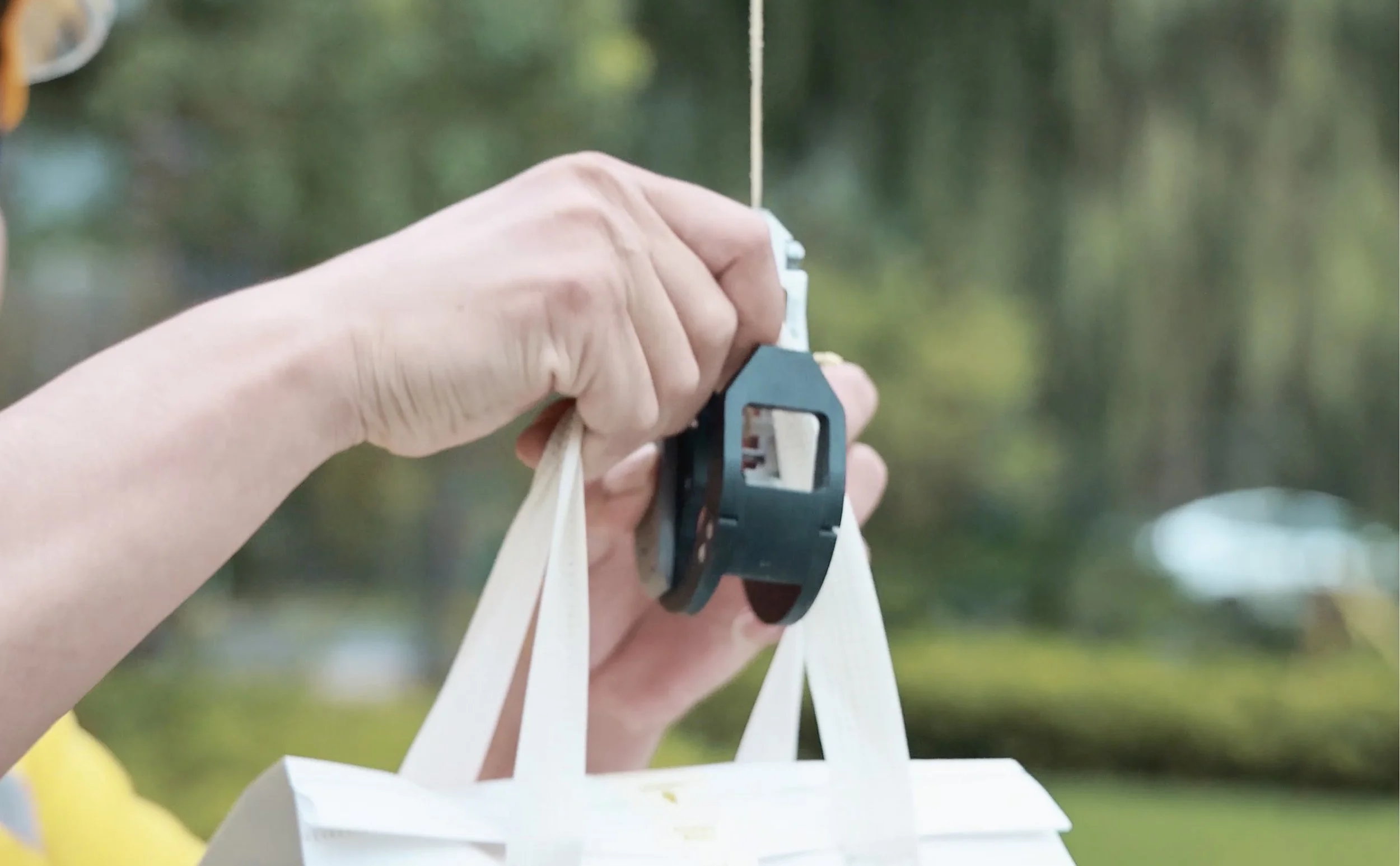
Our Longtail Cargo aircraft is purposefully designed for drone delivery. Its payload includes our A2Z RDS2 Commercial Drone Winch able to pick up and deposit payloads from altitude. The purpose-built cargo drone features a 20km range with 5kg payload under the winch, to extend last-mile delivery missions. Most importantly for the viability of the restaurant deliveries, the Longtail can be loaded by just about anyone when the drone is perched atop our AirDocks. With the spinning propellers kept far from the ground, a restaurant worker can easily attach a handled bag to the payload hook without ever interacting with the aircraft.
How Do Restaurants Use the Shared Drone Services Network?
With 32 AirDocks spread around the region, a single drone operator manages the entire network from a remote-operations-center (ROC). The high volume of elevated drone docks means that a drone pickup location is often right outside the restaurant's door, or a short trip for a staffer on foot or on a scooter.
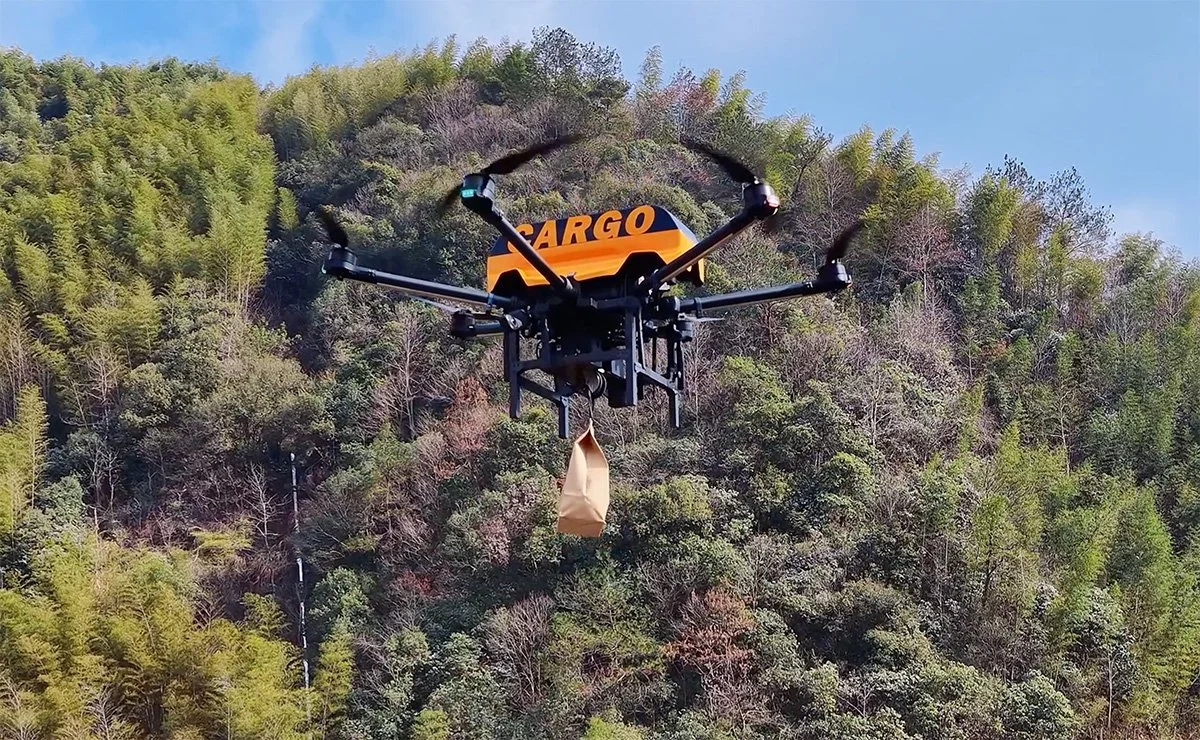
Once at the elevated AirDock, the Longtail lowers its purpose-built payload hook, and the restaurant worker simply hangs the bag of food on the hook. From the ROC, the operator then initiates the delivery – the onboard winch weighs the payload to ensure it is within safe allowances, then winds the order up to the drone and engages the passive payload lock, and it takes off on a preplanned route to the pre-determined destination at a local resort or on a mountain trailhead.
For orders traveling longer distances, the Longtails can stop at any one of the automated drone charging stations to top off batteries before continuing to the delivery location. Once on location, the Longtail hovers high above people and buildings and lowers the food order to the awaiting recipient. The delivery hook automatically releases the bag of food so people never interact directly with the drone or winch hook, an important safety measure that eliminates the potential for human error.
Take to the Food Friendly Skies with A2Z Drone Delivery
Our A2Z AirDocks and companion Longtail aircraft are the keys to unlocking regionwide food deliveries for large chains and local independent restaurants alike. This shared drone infrastructure is already at work on a daily basis and is easily replicated in the right regulatory environments. With the right partners collaborating to stand up a shared dock network, each can simultaneously operate independent drone services while sharing in the overall investment.
If you’re considering launching drone delivery for your restaurant or other repeatable autonomous drone services, and would like help identifying potential partners for a shared drone service network, please contact us today, here: https://www.a2zdronedelivery.com/contact-new