
Commercial Drones Move From Trials to Infrastructure as FAA Expands Operations Under Part 107
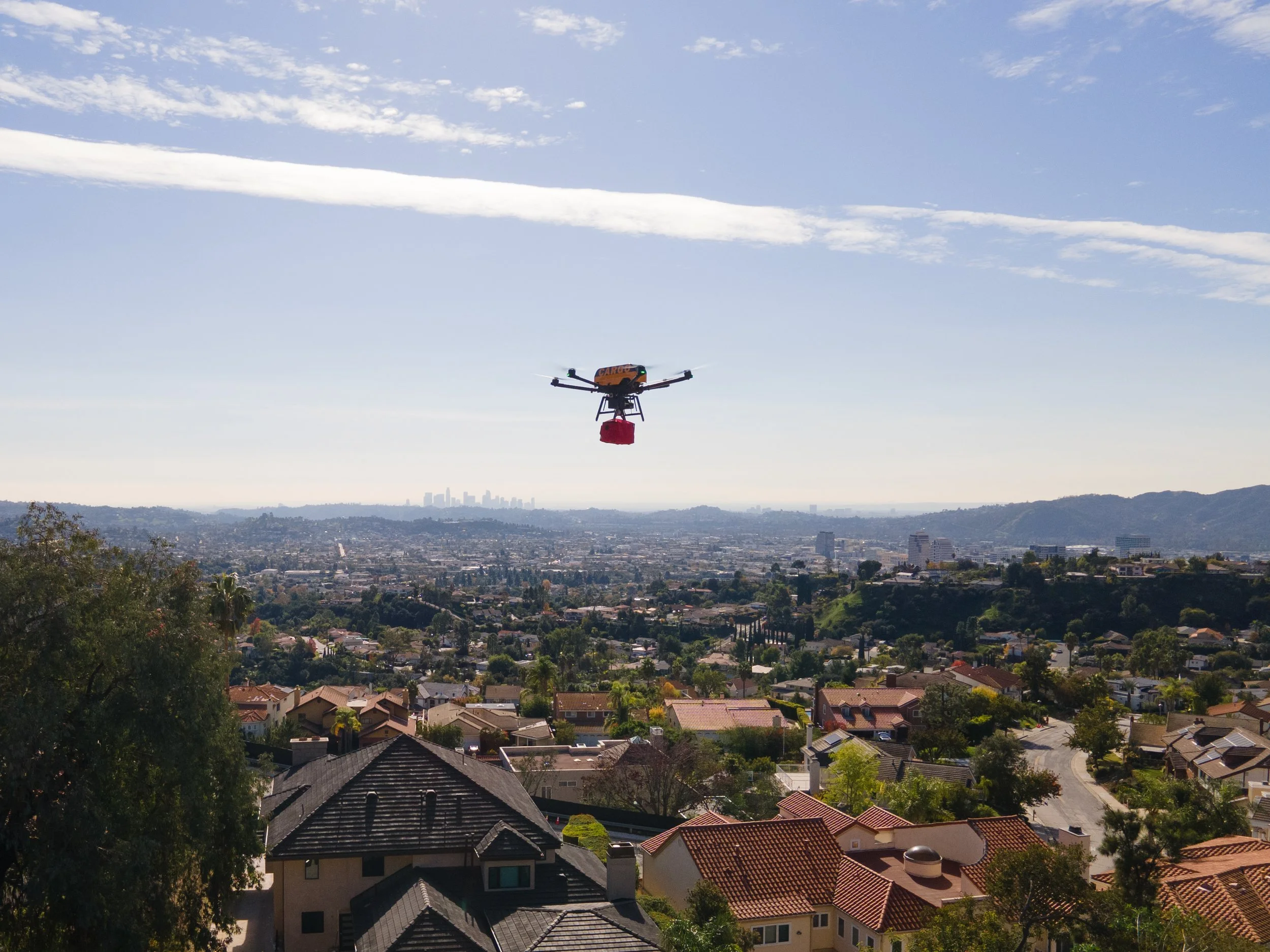
An A2Z Drone Delivery Longtail Cargo UAV conducts flight tests outside Los Angeles
Back in 2024, we published a blog post discussing the viable use cases for commercial drones under the FAA’s Part 107 waiver program. At that point, we highlighted applications that were being reliably approved for waivers mainly because they could be conducted with little impact to people and property, making safe operations easier to ensure. The FAA has always put a stern emphasis on safe drone operations when evaluating waiver applications, but as more trials confirm newly-approved waivered operations can be done safely, the agency has continued to expand its waiver allowances across the country.
For many years, operators have been constrained by strict limitations around visibility, proximity, and scale of commercial use cases. The Part 107 waiver process was a path around some of those limitations, and for a long time, securing waivers was a slow and complex process. In the last couple of years, though, that reality has changed drastically.
The FAA has not made any changes to the Part 107 limitations, but based on the safe track record of more and more commercial drone trials, the agency has taken a more strategic approach to granting waivers for more complex operations. The result is a quiet but powerful shift in the industry that is enabling commercial operations, especially drone delivery, lateral inspection, and drones-as-first-responders (DFR) programs, to scale quickly.
BVLOS Drone Operations Are on the Rise
For many years, commercially viable drone operations were prevented from scaling to profitability by requirements that pilots and forward observers maintain constant line-of-sight visibility with their aircraft. But, there is a transformation currently underway through which the FAA has issued more and more waivers for beyond-visual-line-of-sight (BVLOS) mission parameters.
Now, with the authorization to extend mission range beyond the horizon, without the need for costly forward observers, waiver approvals are allowing far more complex use cases. Based on the success of early commercial drone delivery operations in rural regions, you’ll now find a last-mile delivery drone plying the skies over highly populated urban environments in regions such as Dallas-Fort Worth, Houston, Phoenix, Atlanta, and San Francisco.
Outside drone delivery and airborne UAV logistics, these BVLOS allowances are also able to deliver massive manpower savings for lateral inspection of infrastructure such as power transmission lines, roadways, reservoir systems, and more. While operations above rural transmission lines have been common practice for more than a decade, BVLOS waivers have proliferated drone programs throughout the electricity industry in the last few years, with over-the-horizon inspections now commonplace in many states.
Where BVLOS missions were considered cutting-edge at our last writing in 2024, these missions are now becoming commonplace in specific use cases where safe operations can be proven, even over people and roadways. Operators are no longer testing BVLOS operations in the US; they are building profitable business models that deliver real results under current Part 107 regulations.
Public Safety as a Proving Ground for Drone Technology
One of the most visible areas of expansion has been in public safety, where multi-purpose UAVs can have a real impact on life-saving efforts of first responders.
Across the country, police departments and emergency response teams are automatically deploying drones to provide quick response and early eyes on response scenes. With aerial assets on scene before ground-deployed cruisers or ambulances, responding agents can secure an advanced understanding of the scene at which they are arriving, streamlining response and saving lives.
Search-and-rescue support is also an area where drones have made outsized impacts on emergency response. While some departments continue to rely on a single operator piloting a single drone for search operation support, across the country, more and more operators are building out drone dock infrastructure that allows autonomous patrol of common search areas. With these aerial assets permanently deployed in the field, their response time to forested regions where hikers routinely find themselves lost is even more reactive and impactful.
Across the nation, the FAA has recognized a fairly universal blanket waiver for DFR operations up to 200 feet above ground level (AGL). To support the rapid deployment of these powerful air assets, the FAA has streamlined how it handles waivers for public safety agencies with a new waiver structure referred to as a Certificate of Waiver (COW), which replaces the traditional Certificate of Authorization (COA). These new waivers make it easier for departments to launch BVLOS emergency response networks, patrols over large outdoor events, and perform persistent aerial patrols of commonly-impacted areas.
What Were Considered Higher-Risk Operations Are Becoming Routine
Previously, the FAA had treated ALL types of commercial and first-response drone operations as “high risk,” requiring in-depth waiver applications that were parsed for sparing approvals. Since our last writing in 2024, granted waivers have markedly accelerated, allowing commercial drone flights over people and vehicles, urban BVLOS operations, and “one-to-many” operations with a single pilot monitoring small fleets of drones simultaneously. These waivers are not being handed down casually, though.
Requesting agencies and businesses still need to provide concrete documentation on how the operations will be safely conducted, as well as safety documentation for hardware and its proper operation. What has changed most is the justifying documentation for those waiver requests. As regulators have gained more and more confidence in drone technologies and safety parameters, the success of past similar operations is proving to offer clear justification for the repetition of successful missions. Rather than base waivers solely on prescriptive rules, this past performance-based approach means operators can also demonstrate the prospect of safe operations by choosing the right hardware for their mission parameters. Integrating added safety measures such as detect-and-avoid technology, reliable command and control systems, and redundant safety mechanisms demonstrates a more palatable operational risk assessment for regulators reviewing waiver requests.
Industries like energy, utilities, infrastructure inspection, and DFR operations looking to launch BVLOS drones are currently moving to deploy those assets without the oft-costly expense of redundant human oversight. Companies that invest in autonomous capabilities and advanced sensing are also finding a more rapid deployment path for their use cases to scale.
Waivers Are The Future and The Bridge
So, while Part 107 waivers were originally intended to be a bridge to future regulatory language and processes, the slow evolution of the regulatory environment has ultimately meant that Part 107, and its waiver process, will be the path to near-future innovation in the commercial drone industry. Back in 2024, we – along with much of the UAS sector – were anticipating the near approval of new Part 108 regulations, which would streamline the future of BVLOS use case approvals. As anyone who has investigated this blog post to this point is likely aware, Part 108 continues its start-stop movement towards implementation as we approach the end of Q1 2026.
While it remains difficult to predict the ultimate implementation timeline for the new Part 108 regulations, commercial and DFR operators can take some solace in knowing that many of their more complex BVLOS mission plans are likely to be embraced under the existing Part 107 waiver process.
If you are considering launching a BVLOS drone program here in the US, please reach out to our team, and we can assist you in navigating current allowances and advise you on how to dive into the Part 107 waiver process.