
A Look Back at the Top Advancements in the Commercial Drone Industry for 2025
With the New Year off to a fast start, our team wanted to take a moment to look back on the last year to highlight some of the key advancements in the commercial drone industry in 2025. From expanding drone delivery to next-gen hardware and software and a changing regulatory landscape, the past year saw some significant advancements.
Rapid Expansion of Drone Delivery Trials
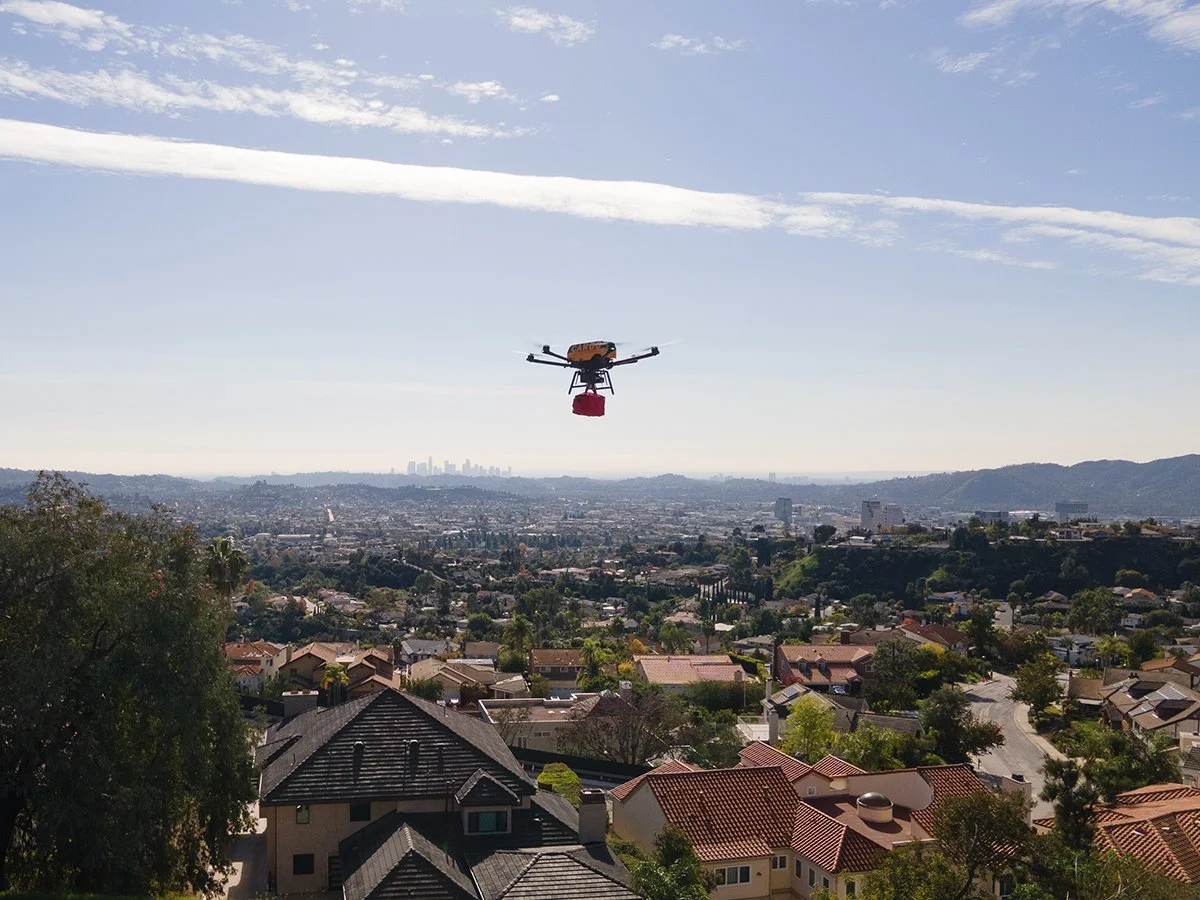
Commercial drone delivery trials made significant progress in 2025, moving beyond rural small-scale trial operations to larger cities and suburbs around the world. In the Dallas-Fort Worth market, Walmart’s rapid home delivery began to scale retail parcel deliveries. The city also saw restaurant chain Chipotle launch food deliveries in the area. Other e-commerce leaders also expanded parcel deliveries in Arizona, North Carolina, Virginia, and Florida.
Across the ocean in Europe, advances in drone delivery trials have been more focused on specific commercial use cases outside general retail delivery. Operations expanded for last-mile food deliveries in Dublin and port deliveries in Antwerp as operators seek to minimize emissions for logistics on land and sea.
Like many commercial drone developers, we maintain a testing facility outside the US where local drone regulations allow us to fly our test drones beyond-visual-line-of-sight (BVLOS) on a daily basis, a difficult task in the US and especially in the urban neighborhoods around our Torrance headquarters. In recent years, we’ve been standing up a milti-mission drone dock network in the region surrounding this BVLOS test facility outside Shanghai.
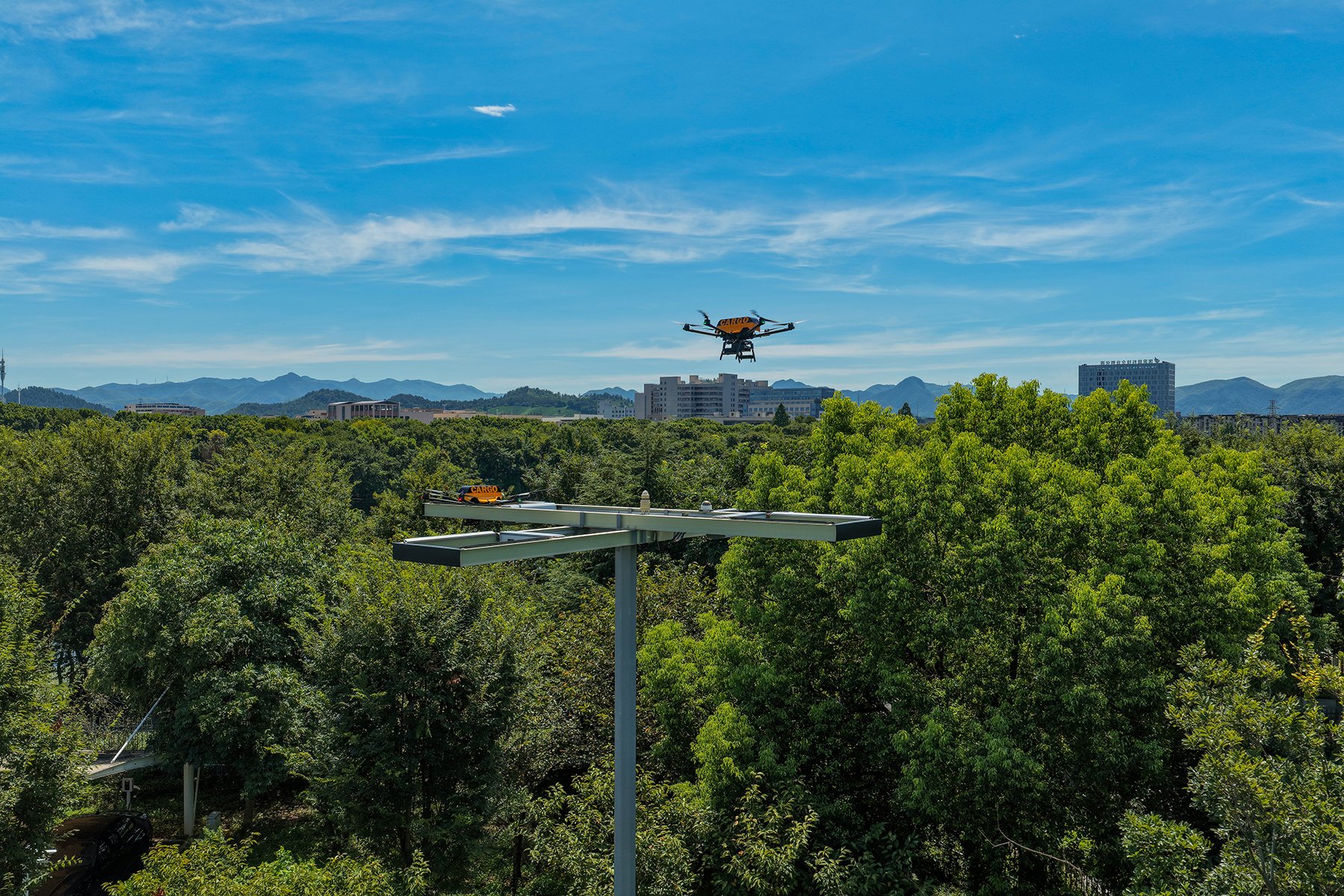
In 2025, this network of A2Z AirDocks expanded further, now enabling delivery drones and other drone services to reach 330square miles. The dock infrastructure supports water resource inspections, traffic congestion oversight, as well as restaurant food deliveries throughout. One of the unique elements of this shared drone service infrastructure is it is not proprietary to a single customer. Because the elevated AirDocks support multiple aircraft simultaneously, we’ve been able to stand up parallel fleets to make food delivery service available to any restaurant in the region.
Commercial Drone Infrastructure Matured
With the proliferation of automated drone-in-a-box systems and innovative drone docks like our A2Z AirDocks, commercial and governmental ecosystems have become more integrated into their various use cases. First responders around the US have built out networks of drone docks around municipalities and integrated the aerial assets with their dispatch systems, enabling virtually instant UAV response to appropriate emergency calls.
The future of US commercial drone operations also took a leap forward as the Department of Transportation initiated a reinvention of the nation’s air traffic systems with an eye towards integrating commercial drone flights. Unmanned Traffic Management (UTM) systems are expected to be a key addition to the ecosystem, enabling BVLOS UAS flights that communicate digitally rather than through extensive voice commands like fixed-wing aircraft. NASA had previously studied UTM systems, rolling out the technology in the Dallas area and unlocking the expanded commercial delivery trials there. Now, state investment in a UTM system for the Winston-Salem (NC) region is attracting commercial drone delivery operations to the market as well.
AI-Assisted Data Analysis
Data management systems also continued to evolve with massive capital investment in edge AI technologies. Aerial photography, infrared, and high-definition video are valuable tools for use cases like drones as first responders (DFR), wildfire detection, surveillance and patrol, and search and rescue, but processing all of that data flowing from a drone fleet needs to be seamless and fast. The deployment of AI learning tools to manage and manipulate this data in the cloud continues to be one rapidly advancing area of the drone market.
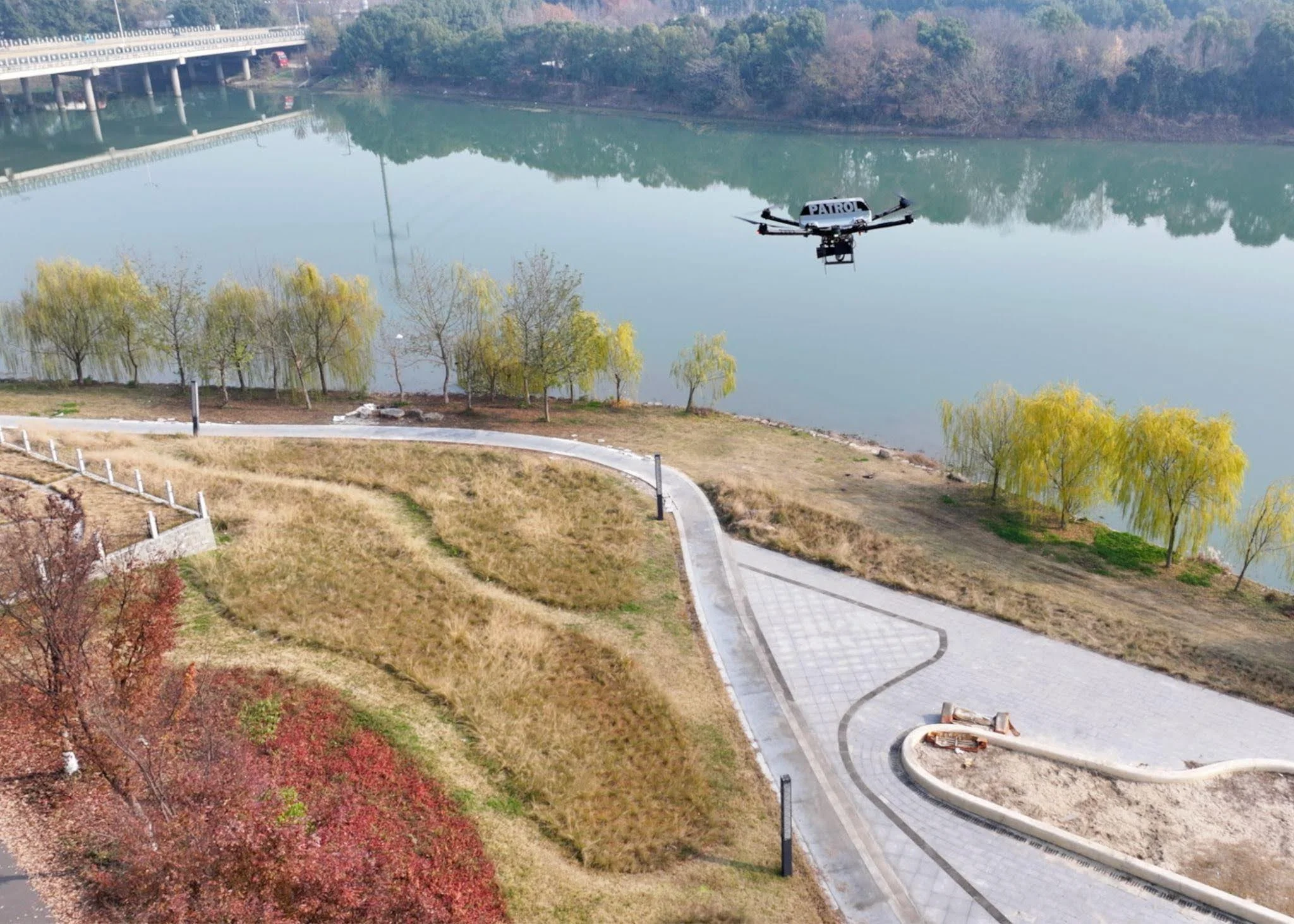
Our team utilizes AI computer vision to create real-time patrol reports from the high-definition and infrared video streaming from our Longtail Patrol drones. These AI tools provide call-outs to fleet operators through our customer web app, showing them potential pollutants detected around drinking water reservoirs, cross-checks AI-detected roadway damage with historical data, etc.
Evolving Regulations Governing Drone Delivery
2025 also saw some all-important advancements in commercial drone regulations. In the US, the FAA finally released its proposed Part 108 rule, which is expected to unlock expanded BVLOS commercial operations, especially for last-mile delivery. The new rule will replace the need for operators to seek a myriad of waivers to the very outdated Part 107 rules. The FAA is still fielding public comment on the proposed rule, but current timelines anticipate Part 108 will become the new guiding regulation in 2026.
In Europe, the agency regulating commercial operations across the continent is the European Union Aviation Safety Agency (EASA), with each member nation also providing local air traffic rules. In 2025, EASA continued its aggressive approach to enabling commercial UAV missions by streamlining its risk-assessment process. These changes make launching a BVLOS drone delivery or other drone service much easier to navigate.
Launching Commercial Drone Services in 2026?
The acceleration of worldwide drone delivery trials, coupled with advancements in the infrastructure making autonomous missions scalable, is about to meet up with a revolutionized regulatory structure that will unlock commercial drone services.
If you are considering launching drone services in 2026, reach out to our team to start a conversation about the technology you’ll need and the regulatory process you face. You can contact us here: https://www.a2zdronedelivery.com/contact-new