
Longtail Dual: Built for the Next Era of BVLOS Drone Operations
Commercial drone operations are moving toward routine, long-range missions that put several use cases on a single aircraft. Two things decide whether an operator can conduct these complex operations at scale: getting regulatory approval, and keeping aircraft in the air. The newest aircraft in our Longtail family, the Longtail Dual, is built around both.
The Longtail Dual pairs battery redundancy with our new A2Z Smart Batteries, with their own health monitoring and rapid recharging, and the safety architecture already proven on the Longtail platform. The result is an aircraft built for the growing number of beyond-visual-line-of-sight (BVLOS) operations over people and over urban terrain.
Designed for a Moving Regulatory Target
The regulatory framework around commercial drone operations is changing fast. Operators who want to fly BVLOS over people and populated areas, whether for last-mile drone delivery or drone as first responder (DFR) missions, have to show that the aircraft and the way it is operated can safely mitigate failures and other hazards.
We designed the Longtail Dual with those risk assessments in mind. Its architecture is meant to help operators build the safety case for FAA Part 107 waivers and the proposed Part 108 rules, as well as the Specific Operations Risk Assessment (SORA) process used in Europe under EASA.
At the center of the aircraft is a genuine dual-battery architecture. In the rare event that one battery system fails, the Longtail Dual keeps flying under full navigational control on the remaining battery, so the crew can bring it down in a controlled landing. For operators building a case for more complex delivery drone missions, that extra layer of redundancy can carry real weight.
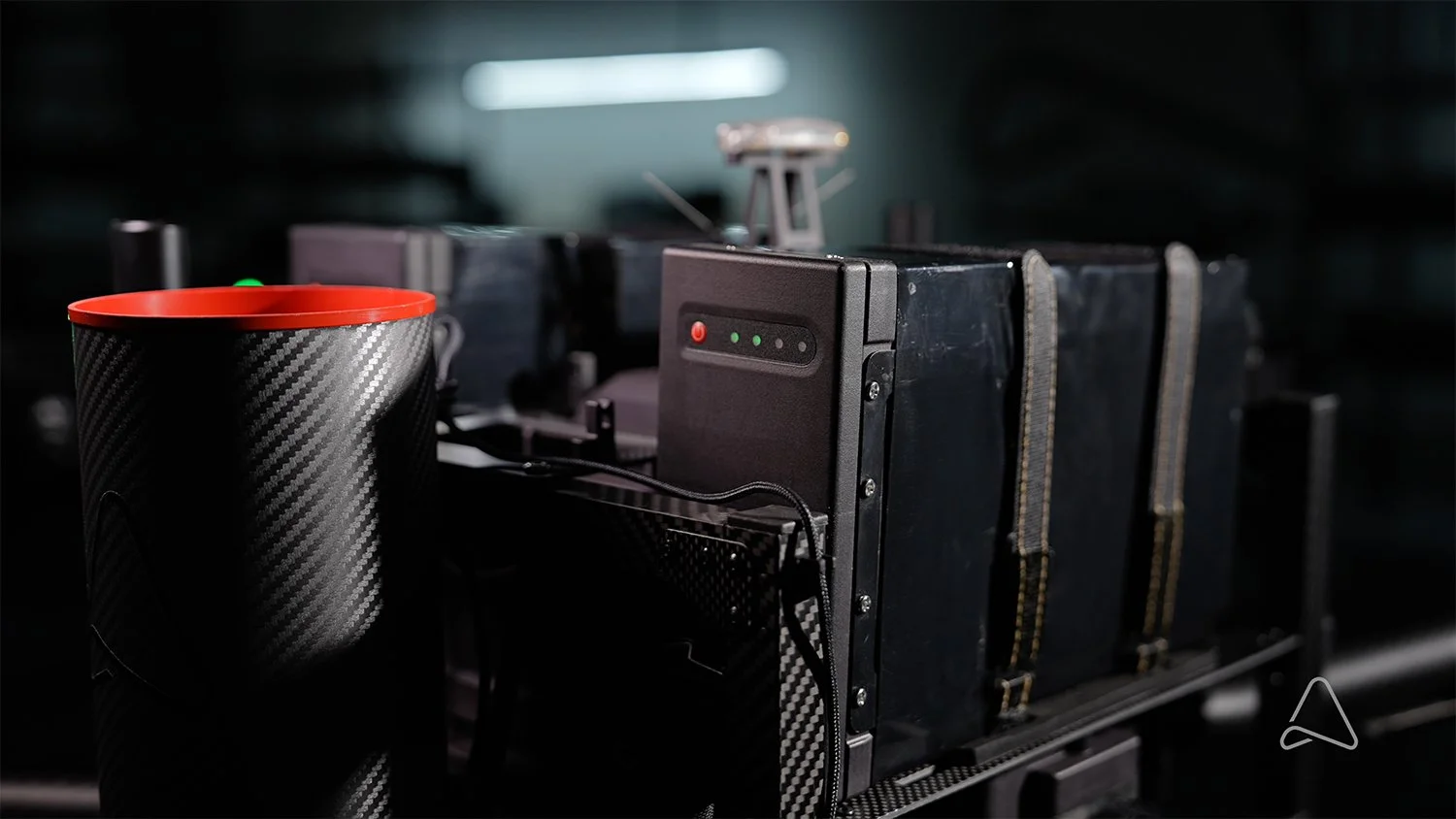
The smart battery system also monitors battery health continuously, including cell temperature, charge cycles, and cell balancing. Battery heating is built into every A2Z Smart Battery rather than added as an extra. Battery heating self-initiates during charging when cell temperatures fall below 50° F (10°C), and the remote pilot can switch it on in flight from the ground control station when conditions call for it. That gives operators a clear picture of how their batteries are performing and removes several potential failure modes on the power system, which is what regulators look for at the risk assessment stage of a waiver application.
Redundancy runs through the rest of the aircraft too: a hexacopter propulsion system that keeps flying after losing a motor, dual-redundant cellular connectivity, a strobe for aircraft-to-aircraft visibility, and ADS-B In and parachute recovery as options.
More Time in the Air, Less Time on the Ground
For a commercial operator, safety is only half the equation. A drone sitting on the ground between flights is not contributing to an operational business model. Last-mile delivery, long-range logistics, public safety, inspection and survey missions all depend on aircraft being available when called upon, which makes charging time and fleet utilization central to whether a drone network can scale.
The Longtail Dual answers this with a battery system that recharges in roughly the same time the aircraft spends flying, when it is perched on an A2Z AirDock. A Longtail Dual that flies a 15-minute delivery route needs about 15 minutes on the AirDock’s automatic conductive chargers to completely refill its batteries.
Because the drone dock handles charging automatically, no field technician has to be on site to look after the aircraft between flights. Combined with automated dock-to-dock operations, the A2Z AirDocks enable operators to keep aircraft moving across a regional network with far less downtime.
Built for More Than Delivery
The Longtail Dual can be configured for last-mile delivery, but it is a multi-mission commercial UAV. Its payload bay can be set up for cargo, for patrol and survey work, or for both at once.
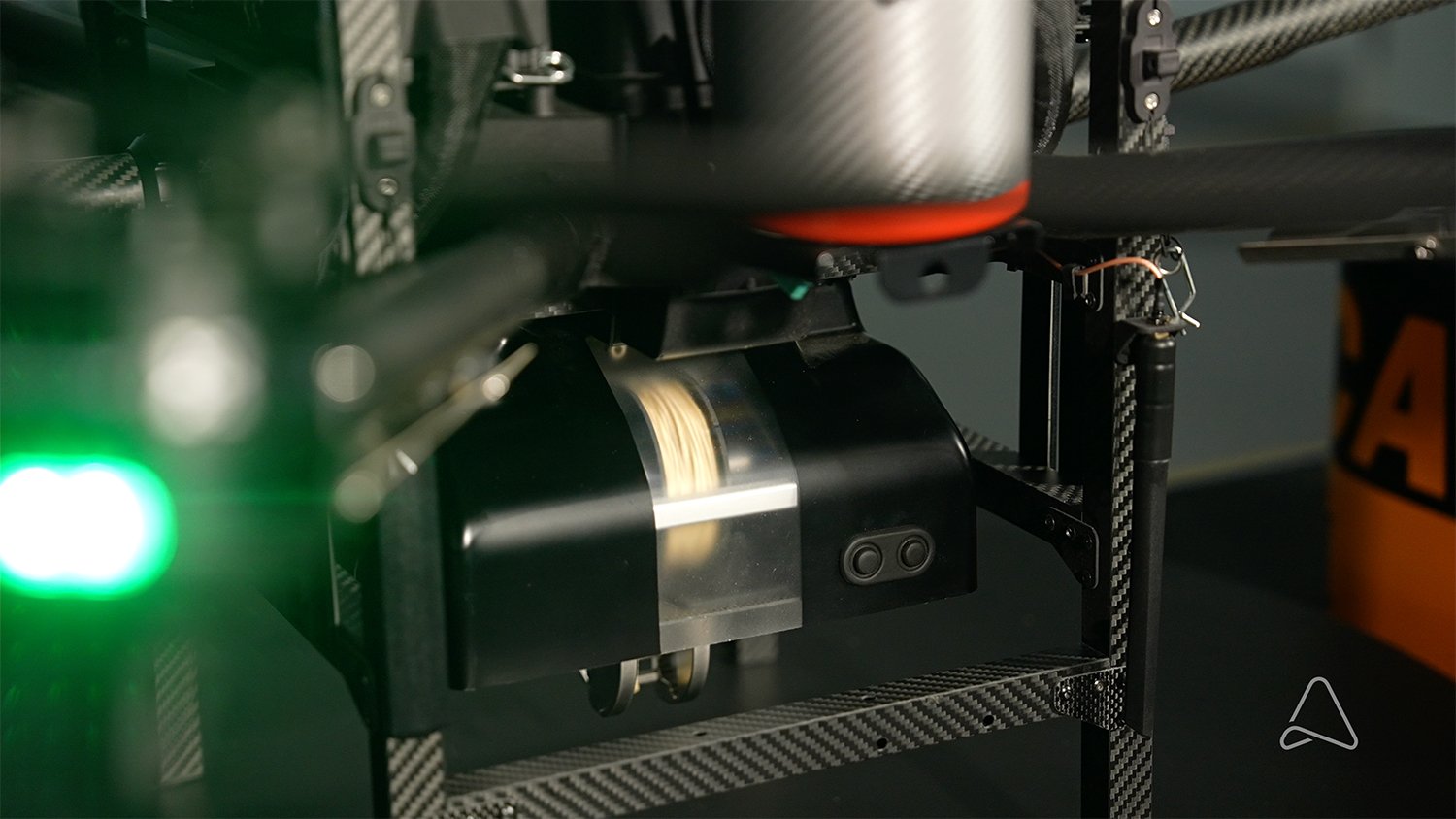
The Longtail Dual Cargo configuration carries the A2Z RDS2 drone winch, which lowers and retrieves packages from altitude without the aircraft landing and without anyone needing to meet it. Delivering from altitude keeps spinning propellers well away from people, property and obstacles on the ground. The RDS2 also carries a downward-facing LiDAR and onboard cameras, so the crew keeps eyes on the delivery throughout an autonomous BVLOS operation.
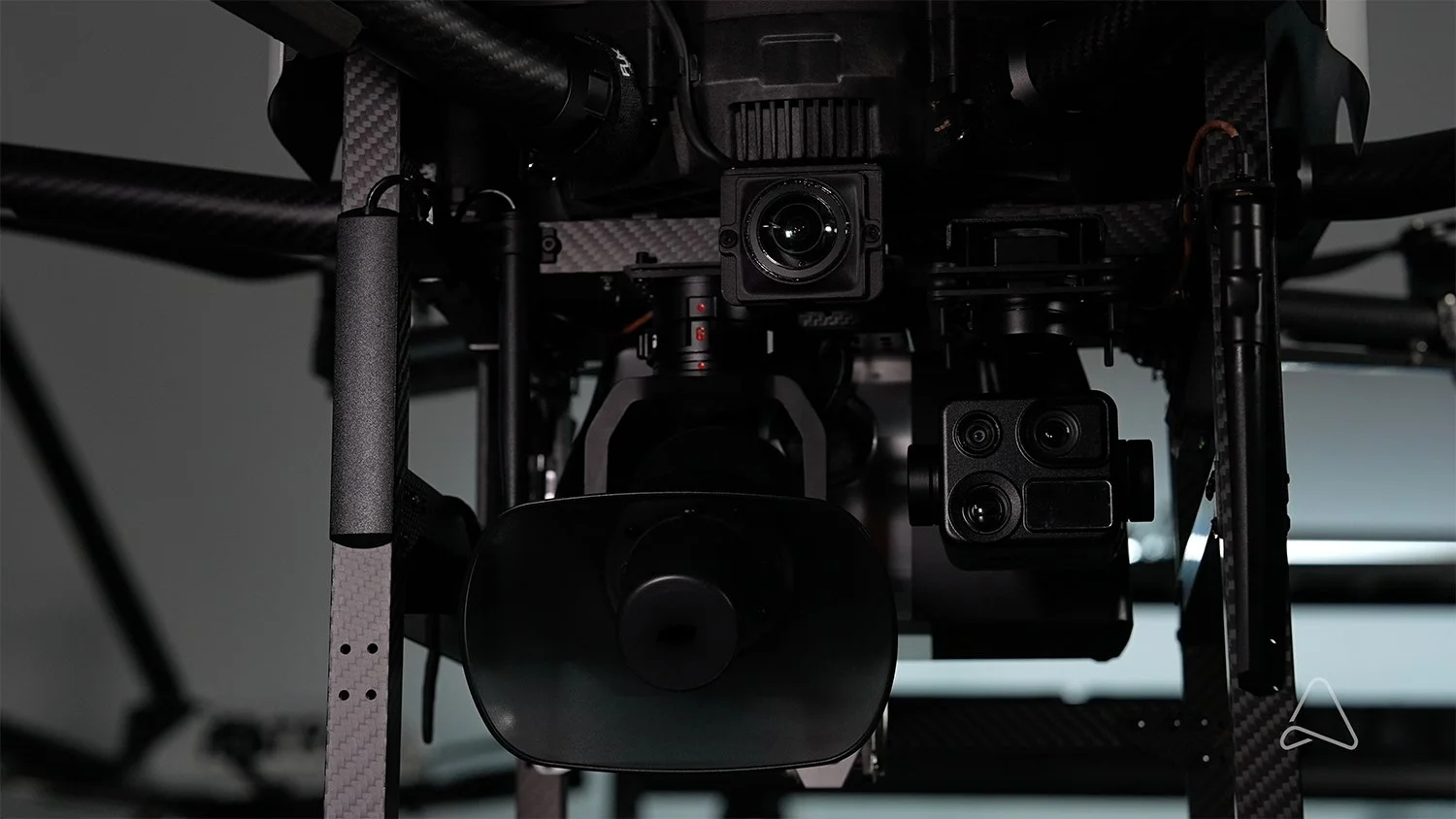
The Longtail Dual Patrol configuration pairs the aircraft with a multi-sensor gimbal camera carrying RGB, wide-angle, and thermal cameras, a laser rangefinder, a high-power spotlight, and a megaphone. That makes it well suited to repeatable autonomous surveillance and survey work, on an aircraft that can still carry equipment to responders on the winch. The Longtail Dual Patrol is a strong fit for drone as first responder (DFR) programs, search and rescue, and persistent surveillance.
This flexible payload bay means that one aircraft can accommodate numerous payload architectures based on the operator’s changing mission parameters.
The Aircraft Is Only Part of the Network
The Longtail Dual is designed to work inside A2Z's wider AirDock and CloudOS ecosystem.
A2Z AirDocks handle automated charging and forward staging, which lets Longtail aircraft move between sites throughout a network rather than being tied to the range of a single launch point. When a mission runs beyond the range of a single battery load, the aircraft simply perches on the next AirDock along the planned route and recharges. Our A2Z CloudOS is the software layer that manages routes, fleets, battery health, and maintenance planning.
Together, the aircraft, the docking infrastructure and the fleet management software work as one system, built for continuous operations rather than one-off flights. With a Longtail fleet and an AirDock network in place, drone services can cover very large areas. The multi-mission network around our Ground Zero Test Facility, for example, covers close to 1,000 square miles and supports DFR, autonomous waterway surveys, rapid search-and-rescue response, and restaurant deliveries across the region.
Preparing for What Comes Next
The next phase of commercial drone operations will take more than longer flight times. Operators need aircraft that can demonstrate solid safety performance, carry out more than one kind of mission, and maintain reliability that unlocks scalable region-wide operations.
The Longtail Dual answers all three the same way: put redundancy where it actually matters, watch the critical systems closely, and keep the aircraft working rather than waiting.
As BVLOS operations spread into cities, infrastructure corridors, and other demanding environments, those qualities matter more and more, both for winning regulatory approval and for building networks that can run continuously and profitably.
If you are planning new drone services and want to know how A2Z's dock infrastructure and aircraft fleets could fit your use cases, please get in touch with our team.