
Benchmarks from Ground Zero: Scaling BVLOS Flight Operations and Advancing Reliability Testing
Here at A2Z Drone Delivery, routine testing and real-world operational missions are central to creating reliable autonomous BVLOS drone delivery infrastructure and aircraft. Over the past months, we’ve ramped up our rigorous component testing and daily BVLOS flights on our A2Z AirDock network spanning almost 1,000 square miles surrounding our Ground Zero Test Facility, and we are excited to detail how some of these tests and daily flights influence product development.
Quantitative Component Testing Data Supports Waiver Applications
Reliable test data is critical. It validates our hardware capabilities as our design team considers future development, and ensures customer confidence in our hardware as they apply for flight waivers.
Whether conducting mission-critical drone deliveries, routine drone patrol and drone inspection surveys, or life-saving drone-as-first responder (DFR) missions or drone search-and-rescue flights, our aircraft need to be able to operate reliably under extreme temperature conditions. Extreme heat and extreme cold temperatures can impact the accuracy of onboard payloads such as sensors, cameras or a drone winch, as well as battery performance and lifetime cycles of battery and airframe.
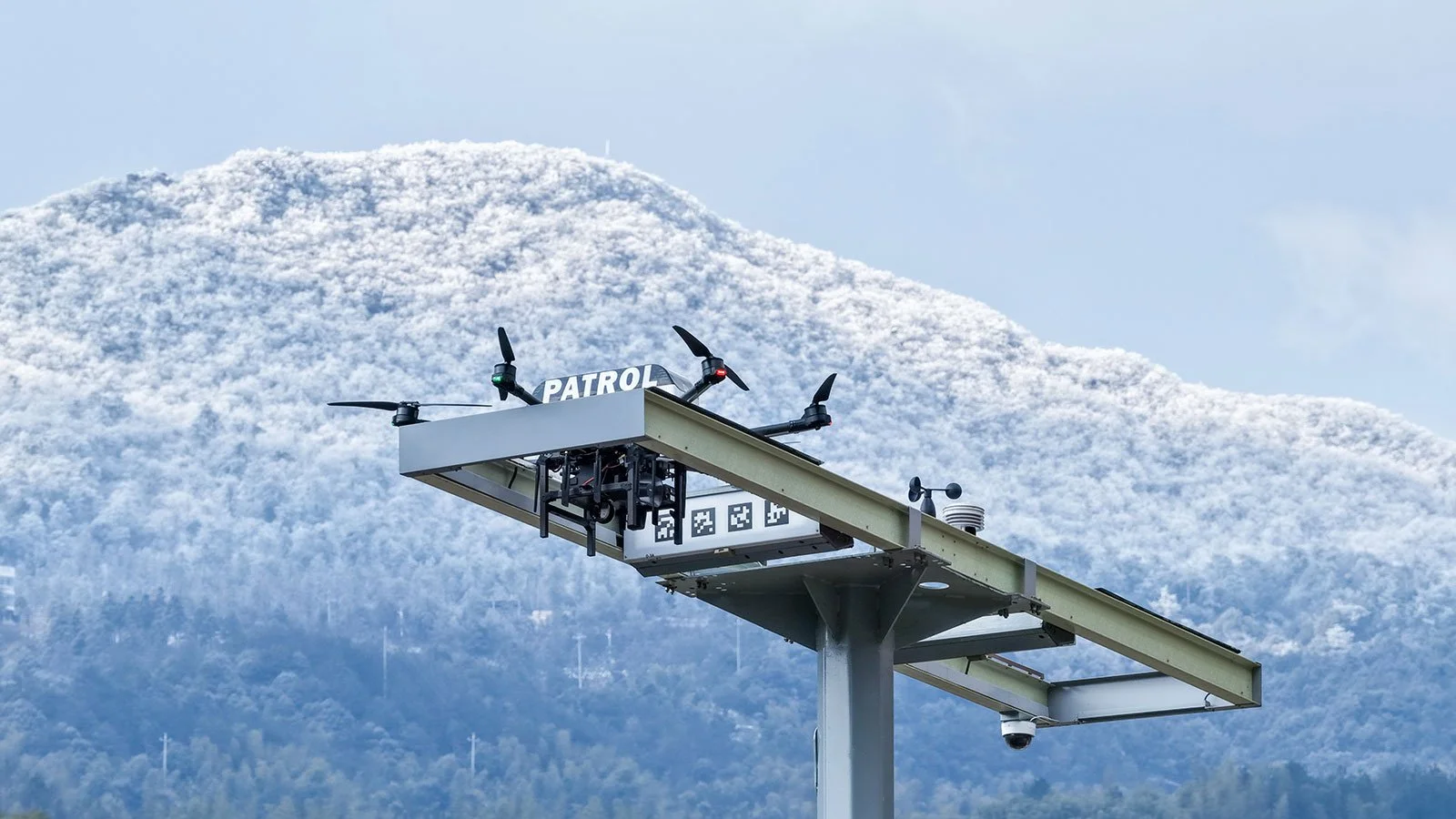
So, one of our long-term, ongoing tests focuses on environmental testing for long-term validation of our Longtail airframes, their critical onboard components, as well as our A2Z AirDocks and their integrated automatic battery charging systems. Our engineers utilize a specialized climate chamber to subject our aircraft and docks to temperatures ranging from -14° F to 113° F (-10°C to 45° C), then analyze impacts on the hardware and onboard components to ensure they are all still within safe operational parameters. These temperature tests are continued throughout the testing cycle of each of our test aircraft and test unit docks to establish long-term durability over hundreds of hours of operations.
Another piece of important testing our team is constantly conducting relates to fatigue-testing the powertrain. Obviously, this testing informs the allowable maintenance durations before the critical component needs to be serviced or replaced. In this test, our team designed special thrust stands to hold standalone rotor motors. The operators run the motors through thousands of cycles leveraging load cells and sensors to chronicle thermal performance, stress, and part degradation.
Data Collection from Daily Multi-Mission BVLOS Operations at Scale
Our real-world flight activity throughout the region surrounding our Ground Zero Test Facility has also continued to expand in scale with new A2Z AirDocks being installed to extend operational range to almost 1,000 square miles. Within the autonomous dock network, our purpose-built Longtail aircraft have taken on more and more use cases, including:
On-demand, last mile drone delivery for independent local restaurants
Repeatable, autonomous waterway and reservoir survey and patrol supported by AI-video analysis tools
Rapid response search-and-rescue support across the surrounding mountains where lost hikers often require emergency response
Autonomous roadway survey and debris detection
These recurring flights not only support local municipal services and commercial drone delivery services, but they are a proving ground for our symbiotic A2Z AirDock and Longtail ecosystem. These real-world operations enable our team to identify unanticipated challenges before customers encounter them in their deployments. The robust operational tempo also allows us to validate system functionality, substantiate BVLOS communication links across urban, suburban and mountainous areas of operation, and fine-tune flight procedures. Operating the entire ecosystem at scale also generates valuable test data and flight hours under operational conditions, providing insight into how the entire network performs as utilization scales.
Validating Previously-Untested New Use Cases
As our Ground Zero dock network continues to expand, new aerial services are able to touch new terrains and locations where we can validate previously-untested applications and increasingly-complex multi-mission use cases. For example, we recently demonstrated how a network of A2Z AirDocks paired with our always-ready Longtail aircraft enables a single remote operator to deploy multiple aerial drone services to support mining operations.
Mining businesses often rely heavily on operational efficiency to increase yield. With a single drone operator working from a remote operations center (ROC), our multi-mission systems can conduct numerous autonomous missions in support of these operations, including:
Geotechnical surveying and generation of accurate volumetric estimates from pinpoint 3D data
24-hour unmanned aerial patrols to maintain remote surveillance of an entire mining facility
On-demand cargo pickup and delivery that streamlines operations by delivering tools and small equipment to the field, and retrieving samples quickly
The diverse landscapes and extensive range of our AirDock network around Ground Zero made it possible to vet this mining use case for a potential customer, and provide deeper insights into just how the multi-mission aerial services could interact on a shared dock network.
Conclusion
Regulatory agencies around the world continue to evolve their approval processes, shifting to a risk analysis approach that puts the responsibility on the applicant to prove new BVLOS use cases can be accomplished safely and reliably. The daily validation testing that our team does at our Ground Zero Test Facility delivers the real-world insights and chronicled flight testing data that customers need to navigate these risk analysis reviews. Additionally, our ability to “test drive” new and experimental use cases, and see how operations will scale under real operational conditions, enables customers to demonstrate to regulators and investors that safe and reliable missions are possible as they enter review of waiver requests or mission approvals.
If you have been considering how multi-mission autonomous aerial services can impact your business, contact our team to explore how a network of our A2Z AirDocks and integrated Longtail aircraft can help you stand up an entire unmanned aerial ecosystem at scale.